Which Magnesium Type Actually Helps With Workout Recovery and Sleep?
Quick Answer: Magnesium glycinate is generally the best choice for sleep and recovery specifically because it’s highly absorbable and gentle on digestion, while magnesium citrate works well for general supplementation but can have a mild laxative effect at higher doses — the cheaper magnesium oxide found in many multivitamins is poorly absorbed and a weak choice for either goal.
Grabbing whatever magnesium is cheapest on the shelf usually means grabbing the form your body absorbs the least of.

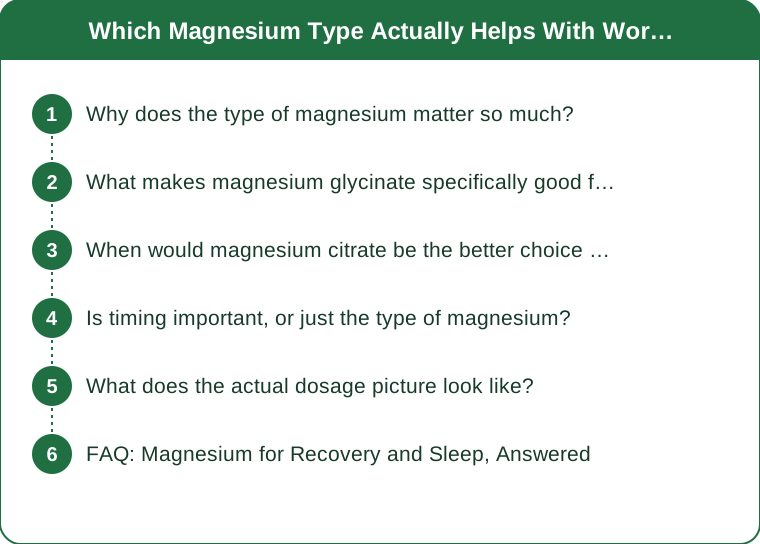
Why does the type of magnesium matter so much?
Different magnesium compounds have dramatically different absorption rates — magnesium oxide, common in cheap multivitamins, has absorption rates estimated around 4%, while glycinate and citrate absorb far more efficiently. Taking a poorly absorbed form largely defeats the purpose of supplementing at all.
What makes magnesium glycinate specifically good for sleep and recovery?
Glycinate pairs magnesium with glycine, an amino acid with its own calming, sleep-supportive properties, and it’s notably gentle on the stomach even at higher doses. This combination is why it’s the most commonly recommended type specifically for evening use and muscle recovery.
When would magnesium citrate be the better choice instead?
Citrate is well-absorbed and less expensive than glycinate, making it a reasonable general-purpose choice — but its mild laxative effect at higher doses (400mg+) means it’s less ideal right before bed or around intense training when digestive comfort matters more.

Is timing important, or just the type of magnesium?
Timing matters for the sleep-specific benefit — taking magnesium glycinate roughly 30-60 minutes before bed aligns its calming effect with your wind-down window. For general recovery support, consistent daily timing matters more than the specific hour.
What does the actual dosage picture look like?
Most research on recovery and sleep benefits uses somewhere in the 200-400mg range of elemental magnesium daily, and it’s worth checking supplement labels carefully since ‘magnesium glycinate 500mg’ often means a smaller elemental magnesium amount within that total compound weight.
FAQ: Magnesium for Recovery and Sleep, Answered
Can I get enough magnesium from food instead of supplementing?
Magnesium-rich foods (leafy greens, nuts, seeds, dark chocolate) help, but many people still fall short of optimal intake through diet alone, especially with high training volume.
Is it safe to take magnesium every day long-term?
Generally yes at recommended doses for people with normal kidney function — check with a doctor first if you have any kidney condition or take other medications.
How long before I notice a difference in sleep or recovery?
Most people report noticing effects within 1-2 weeks of consistent daily use, though individual response varies based on baseline magnesium status.
TL;DR:
- Magnesium type matters enormously — absorption rates vary widely between compounds
- Glycinate is the strongest pick for sleep and recovery specifically, and gentle on digestion
- Citrate works well generally but can cause digestive upset at higher doses
- Check elemental magnesium amount on labels, not just the total compound weight
This is general information, not medical advice — check with a doctor before starting supplementation if you have kidney concerns or take other medications.
Keep Reading
This article is for general informational purposes only and is not medical advice. Always consult a qualified health professional for guidance specific to you.