Does an Epsom Salt Bath Actually Raise Your Magnesium Levels?
Quick Answer: Evidence that Epsom salt baths meaningfully raise blood magnesium levels through skin absorption is weak and inconsistent. The relaxation benefit of a warm bath itself is real — the magnesium-absorption claim specifically is not well supported.
Epsom salt baths are a popular ritual for sore muscles and stress relief, often marketed specifically as a way to ‘absorb magnesium through your skin.’ The relaxation is real. The magnesium claim is on much shakier ground.

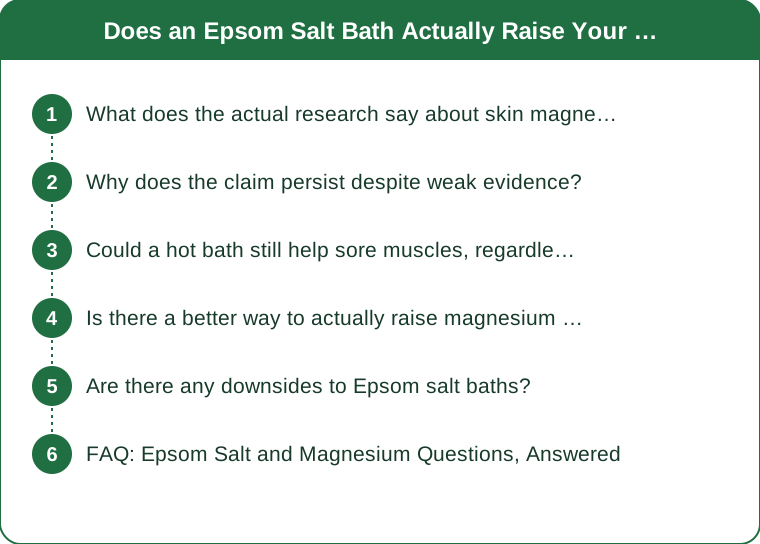
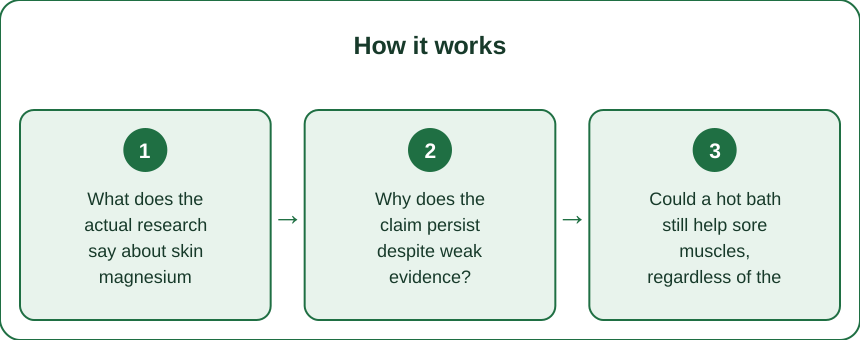
What does the actual research say about skin magnesium absorption?
A small number of studies have tested this directly, with mixed and largely unconvincing results — some found no significant change in blood magnesium levels after Epsom salt bathing, while others found modest changes that weren’t consistently replicated. The skin is generally a poor barrier for absorbing minerals in meaningful quantities compared to the digestive tract.
Why does the claim persist despite weak evidence?
Epsom salt (magnesium sulfate) does contain magnesium, and warm baths genuinely do relax muscles and reduce stress — both real, separate effects that get bundled together into ‘the bath gave me magnesium’ in popular understanding, even though the relaxation likely comes mostly from warmth, muscle release, and downtime, not mineral absorption.
Could a hot bath still help sore muscles, regardless of the magnesium question?
Yes — heat itself increases blood flow and can ease muscle tension, independent of any mineral content in the water. If Epsom salt baths help you feel better after a hard workout, that benefit is likely real, just probably not attributable to significant magnesium absorption specifically.

Is there a better way to actually raise magnesium levels?
Oral intake — food or supplements — is the well-established, evidence-backed route for meaningfully changing magnesium status. Magnesium-rich foods (leafy greens, nuts, seeds) or a well-absorbed oral supplement (glycinate or citrate forms) have far stronger evidence behind them than topical application.
Are there any downsides to Epsom salt baths?
For most people, no significant downsides — they’re generally safe and pleasant as a relaxation ritual. People with certain skin conditions, open wounds, or specific medical conditions should check with a doctor first, and very hot water for extended periods can cause skin dryness with frequent use.
FAQ: Epsom Salt and Magnesium Questions, Answered
Should I stop taking Epsom salt baths if they don’t raise magnesium?
Not necessarily — if you enjoy the relaxation and muscle-ease benefit, that part of the ritual is likely still legitimate, just not for the magnesium-specific reason often marketed.
Does magnesium oil (a topical spray) work any better than baths?
Evidence for topical magnesium oil is similarly weak and inconsistent — the skin-absorption mechanism faces the same basic limitations regardless of application method.
How much Epsom salt is typically used in these baths?
Common recommendations range from 1-2 cups per standard bathtub, though this is based on tradition and comfort rather than any established absorption-based dosing.
TL;DR:
- Evidence for meaningful magnesium absorption through skin during an Epsom salt bath is weak and inconsistent
- The relaxation and muscle-ease benefits of a warm bath are real, but likely from heat, not magnesium
- Oral intake (food or supplements) remains the evidence-backed way to actually raise magnesium levels
- Enjoy the bath for the ritual and warmth — just don’t count on it as your magnesium strategy
If raising magnesium is the actual goal, a well-absorbed oral supplement or magnesium-rich diet does the job the bath likely doesn’t.
Keep Reading
This article is for general informational purposes only and is not medical advice. Always consult a qualified health professional for guidance specific to you.