Does When You Take Magnesium Around Workouts Actually Matter?
Quick Answer: Magnesium doesn’t need precise workout-adjacent timing to be effective for its main roles in muscle function and recovery — consistent daily intake matters far more than whether you take it before, during, or after training, though evening dosing may offer a secondary sleep benefit worth considering.
Supplement timing gets a lot of attention, but for magnesium specifically, the evidence points somewhere less complicated than most timing advice suggests.

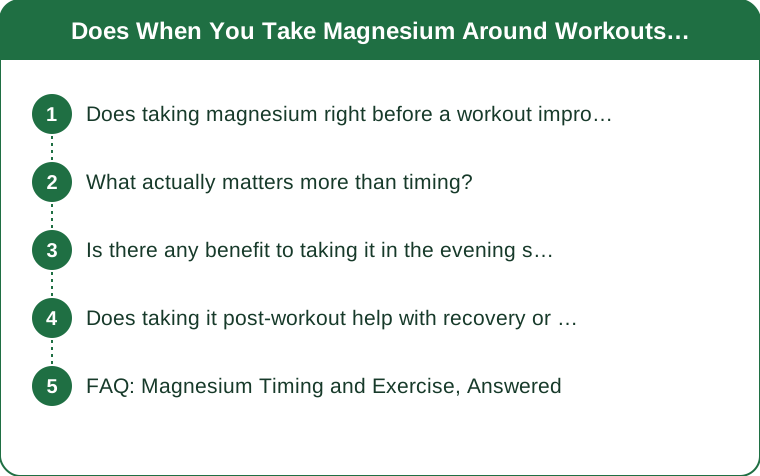
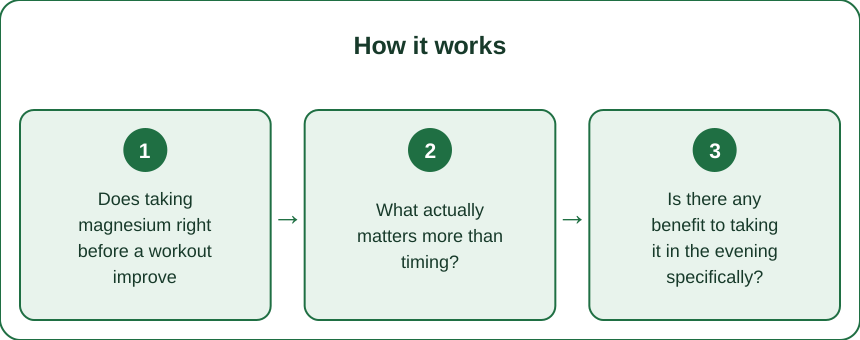
Does taking magnesium right before a workout improve performance?
There’s no strong evidence for an acute, workout-adjacent performance boost from timing magnesium immediately before training. Magnesium’s role is more about maintaining adequate levels for ongoing muscle and nerve function, not providing an immediate pre-workout effect the way caffeine does.
What actually matters more than timing?
Consistent daily intake sufficient to meet your baseline needs matters far more than precise timing. Magnesium deficiency, if present, affects muscle function and recovery over time regardless of exactly when in the day you take a supplement.

Is there any benefit to taking it in the evening specifically?
Some people report improved sleep quality when taking magnesium in the evening, likely related to its role in nervous system regulation. This is a secondary consideration worth trying, though it’s about sleep rather than direct workout performance.
Does taking it post-workout help with recovery or soreness?
Adequate magnesium status supports normal muscle relaxation and recovery processes, but there’s no strong evidence a post-workout dose specifically accelerates recovery beyond what consistent daily adequate intake already provides.
FAQ: Magnesium Timing and Exercise, Answered
Should I take magnesium on an empty stomach or with food?
With food is generally recommended, since some forms can cause digestive upset on an empty stomach.
Does the type of magnesium change the timing question?
Not significantly for timing purposes, though different forms (glycinate, citrate) vary in absorption and digestive tolerance.
Can I get enough magnesium from food instead of supplementing?
Yes, for many people — leafy greens, nuts, and whole grains provide meaningful magnesium, and supplementing is most relevant if intake or absorption is genuinely insufficient.
TL;DR:
- No strong evidence supports precise pre-workout timing for a performance boost
- Consistent daily intake matters more than exactly when you take it
- Evening dosing may offer a secondary sleep benefit for some people
- Post-workout timing doesn’t meaningfully accelerate recovery beyond adequate daily intake
Keep Reading
This article is for general informational purposes only and is not medical advice. Always consult a qualified health professional for guidance specific to you.