How Long Does It Actually Take for Magnesium to Work?
Quick Answer: Some effects, like muscle relaxation and sleep quality, can show up within a few days to a week, but correcting an actual magnesium deficiency and seeing its full benefits typically takes 4-8 weeks of consistent daily supplementation.

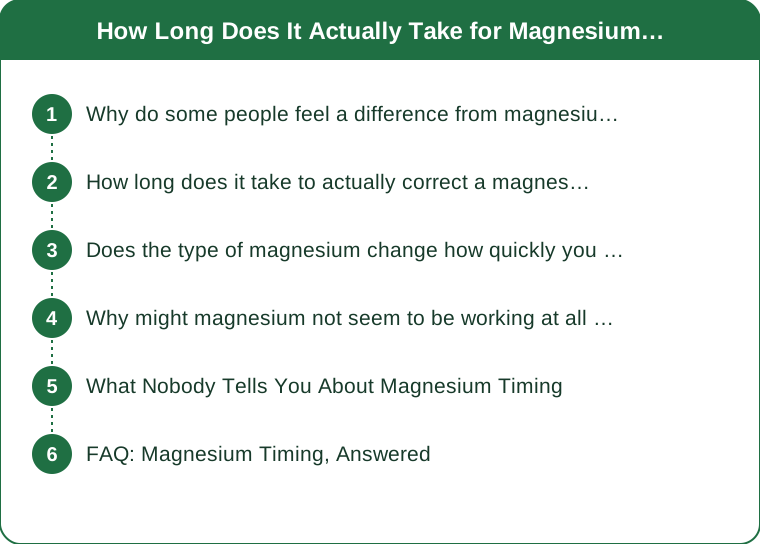
Why do some people feel a difference from magnesium almost immediately?
Magnesium has a direct calming effect on the nervous system and muscle tissue that doesn’t require weeks to build up — this is why some people notice looser muscles or easier sleep within just a few nights. This fast effect is separate from correcting a longer-term deficiency, which works on a different timeline.
How long does it take to actually correct a magnesium deficiency?
Cellular magnesium levels take longer to rebuild than blood levels suggest — most research points to 4-8 weeks of consistent daily intake before deficiency-related symptoms like frequent cramping, anxiety, or poor sleep meaningfully improve. Blood tests can look normal even when tissue levels are still low, which is part of why the timeline feels slower than expected.
Does the type of magnesium change how quickly you notice effects?
Somewhat — glycinate is often reported as calming faster for sleep and anxiety, while citrate is absorbed quickly but is more associated with digestive effects than a fast systemic benefit. Timing also matters as much as type: taking it 30-60 minutes before bed lines up its calming effect with when you actually need it.

Why might magnesium not seem to be working at all for some people?
The most common reasons are inconsistent daily use, an underlying absorption issue, or simply not having a deficiency to correct in the first place. If you’re not deficient, supplementing more won’t create additional benefit beyond a certain point — magnesium isn’t a stimulant-style substance where more always does more.
What Nobody Tells You About Magnesium Timing
Most product marketing implies magnesium works like a sleep aid you take once and feel immediately — but the people who report the biggest improvements are almost always describing weeks of consistent daily use, not a single dose. The immediate muscle-relaxation feeling some people get is real, but it’s a smaller effect than the deficiency-correction benefit most people are actually hoping for.
FAQ: Magnesium Timing, Answered
Should you take magnesium every single day or only when you notice symptoms?
Daily, consistent use is more effective than sporadic dosing, since it takes sustained intake to rebuild tissue-level magnesium stores rather than a single dose reacting to a symptom.
Can you take too much magnesium while waiting to see results?
Yes — exceeding the recommended dose doesn’t speed up results and commonly causes digestive upset like loose stools, so stick to the labeled dose rather than increasing it out of impatience.
Is it normal to feel nothing at all in the first week?
Yes, this is common and doesn’t mean it isn’t working — the deficiency-correction benefits build gradually over the following weeks even when the first week feels uneventful.
TL;DR:
- Muscle relaxation and sleep effects can appear within days
- Correcting an actual deficiency typically takes 4-8 weeks of consistent use
- Glycinate is often reported as faster-acting for sleep and calm
- Daily consistency matters more than dose size once you’re within the recommended range
If you’ve only taken magnesium for a few days and feel nothing, that’s not a failure — it’s simply too early to judge the deficiency-correction benefit yet.
Keep Reading
This article is for general informational purposes only and is not medical advice. Always consult a qualified health professional for guidance specific to you.