Does Magnesium Actually Help With Anxiety, or Is That Overstated?
Quick Answer: Magnesium plays a genuine role in regulating the nervous system and the stress-response (HPA axis), and some studies show modest anxiety symptom improvement with supplementation — particularly in people with existing magnesium deficiency — but the evidence overall is preliminary and mixed, meaning it’s a reasonable, low-risk thing to check and address, not a proven standalone anxiety treatment.
The wellness-space version of this claim tends to skip the deficiency caveat, treating magnesium as a universal anxiety fix rather than the more targeted, deficiency-dependent benefit the actual research supports.

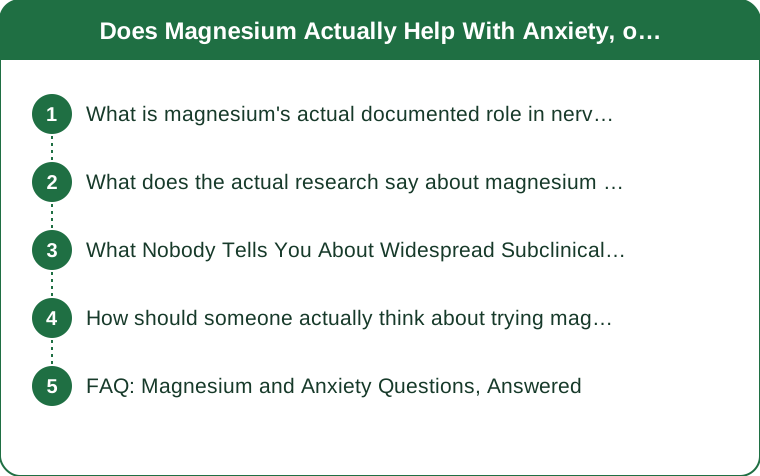
What is magnesium’s actual documented role in nervous system regulation?
Magnesium is involved in regulating NMDA receptors and GABA activity in the brain — both systems closely tied to the nervous system’s excitatory/calming balance — giving it a genuine, biologically plausible mechanism for influencing stress and anxiety-related processes.
This is a real and well-established mechanism, but a plausible mechanism existing doesn’t automatically mean supplementation produces a large clinical effect for everyone — that’s a separate question the research addresses more cautiously.
What does the actual research say about magnesium supplementation and anxiety symptoms?
Several small studies and a few systematic reviews have found modest anxiety symptom improvement with magnesium supplementation, but study quality, sample sizes, and dosing protocols vary considerably, and results are not uniformly consistent across all studies.
The most consistent positive findings tend to appear in populations with confirmed or likely magnesium deficiency, which suggests supplementation may be correcting a specific deficit-driven contributor to anxiety symptoms, rather than acting as a universal anti-anxiety agent regardless of baseline status.

What Nobody Tells You About Widespread Subclinical Deficiency
Here’s a relevant detail often left out: a meaningful portion of the general population has magnesium intake below recommended levels, often without dramatic overt deficiency symptoms — meaning many people supplementing and noticing improvement may genuinely be correcting a real, if mild, existing shortfall rather than experiencing a placebo effect or an unrelated general wellness benefit.
This makes checking actual dietary magnesium intake, or testing levels if anxiety is a persistent concern, more informative than either assuming magnesium will fix anxiety or dismissing it outright.
How should someone actually think about trying magnesium for anxiety?
- Reviewing dietary intake first — nuts, seeds, leafy greens, whole grains — since correcting a mild deficiency through food is a reasonable low-risk first step
- Trying supplementation as one component, not a replacement for established anxiety treatments (therapy, medication where appropriate) if anxiety is significant
- Being realistic about the modest, not dramatic, effect size the current research actually supports
- Consulting a doctor before high-dose supplementation, particularly for anyone with kidney issues or taking other medications
FAQ: Magnesium and Anxiety Questions, Answered
Which type of magnesium is best for anxiety specifically?
Magnesium glycinate is commonly recommended in this context due to good absorption and a lower likelihood of digestive side effects compared to some other forms, though research directly comparing forms for anxiety specifically remains limited.
Can magnesium replace anxiety medication?
No — it shouldn’t be used as a replacement for prescribed anxiety treatment; at most, it may serve as a complementary, deficiency-correcting addition alongside established care.
How long does it take to notice an effect from magnesium supplementation?
Studies showing benefit generally used several weeks of consistent supplementation, so it’s not typically an immediate-effect intervention.
TL;DR:
- Magnesium has a real, plausible mechanism for nervous system and stress-response regulation
- Research shows modest anxiety improvement, most consistently in people with existing deficiency
- Subclinical magnesium deficiency is common, which may explain why some people notice real benefit
- It’s a reasonable low-risk addition, but not a replacement for established anxiety treatment
Magnesium isn’t a proven anxiety cure, but checking your intake is a legitimate, low-risk step worth taking seriously rather than dismissing as pure wellness hype.
Keep Reading
This article is for general informational purposes only and is not medical advice. Always consult a qualified health professional for guidance specific to you.