The Magnesium Edit: The Mineral Behind Sleep and Calm
Quick Answer: Magnesium is involved in hundreds of body processes and a large share of adults under-consume it, which is why supplementing helps some people meaningfully. Glycinate is the general-purpose evening form; oxide is poorly absorbed and best skipped. A typical supplemental dose is 200-350mg of a well-absorbed form. Food — seeds, greens, beans, nuts — does much of the job for free. Info, not medical advice.
Somewhere between 2023 and now, magnesium went from a mineral your multivitamin mentioned in small print to a personality trait. There are magnesium mocktails. There are people who will tell you, unprompted, which form they take.
The pitch is genuinely compelling: a mineral involved in 300+ body processes, commonly under-consumed, tied to sleep and calm. And it’s partly right — but the details decide whether your bottle is money well spent or an expensive way to make your evening feel ceremonial.

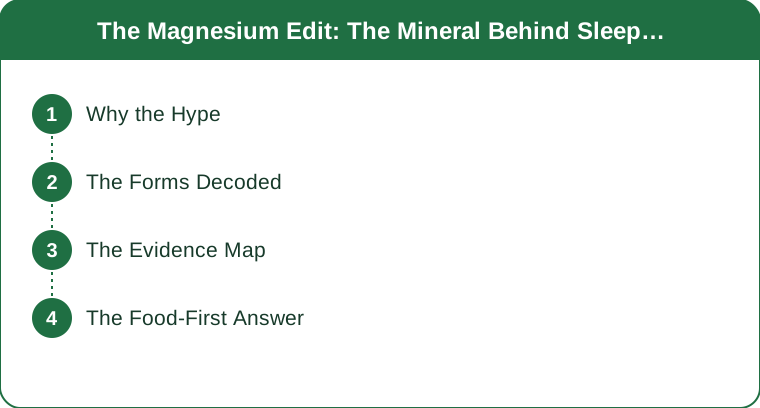
Why Is Everyone Suddenly Taking Magnesium?
The legitimate core is real. Magnesium participates in muscle function, nervous-system regulation, sleep architecture and energy production, and dietary intake surveys consistently show a large share of adults falling short of recommended intakes. The modern processed-food diet is fairly magnesium-stripped — it’s the mineral cousin of the fiber gap nobody talks about either.
Here’s the catch the marketing skips: “commonly suboptimal” is not “everyone is deficient.”
True clinical magnesium deficiency is relatively uncommon in healthy people, because your kidneys are quite good at holding onto it. What’s common is running lower than ideal. That distinction matters enormously, because the benefits of supplementing show up most clearly in people who were actually running low.
Dramatic overnight transformations are marketing, not magnesium. If you take your first capsule and sleep like a Victorian child, some of that is real and some of it is the same effect a new bedtime ritual has on anyone.
Which Form of Magnesium Should You Take?
The form line on the label matters far more than the brand on the front.
- Glycinate (bisglycinate) — well absorbed, gentle on the gut, the evening-calm favorite. The most commonly recommended general-purpose form, and the sensible default.
- Citrate — well absorbed, with a famous laxative side hustle. Dose-dependent, and some people buy it specifically for that. Take with food.
- Oxide — cheap, poorly absorbed, and the aisle’s decoy. It’s what’s in most bargain bottles and most gummies. High milligram number on the label, low amount that actually gets in.
- Malate — the daytime-leaning option, sometimes chosen by people focused on muscle fatigue.
- L-threonate — the brain-marketing premium form. Early research is genuinely interesting; the premium price is currently ahead of the evidence.
- Sprays, oils and bath flakes — lovely baths. The transdermal absorption evidence is thin, so enjoy the soak as a soak rather than as a dose.
Rule of thumb: if the label doesn’t tell you which form it is, that’s the answer.

Myth vs Fact
Myth: Magnesium is a sedative that knocks you out. Fact: Sleep findings are real but modest — improvements in falling asleep and sleep quality show up most reliably in older adults and people with low magnesium status. It’s not a sleeping pill, and expecting one is the fastest route to disappointment.
Myth: A higher milligram number means a stronger product. Fact: The number on the front is elemental magnesium in the bottle, not what your body absorbs. 400mg of oxide can deliver less usable magnesium than 200mg of glycinate. Read the form, then the number.
Myth: Magnesium cures muscle cramps. Fact: The evidence is genuinely mixed. It’s a reasonable, low-cost trial if you’re cramp-prone, and some people respond well — but pregnancy-related and nocturnal leg cramp studies have produced inconsistent results.
Myth: You can’t get enough from food. Fact: You very much can. This is the part nobody markets, for the obvious reason that nobody owns the pumpkin seed patent.
Myth: More is better, so take a big dose. Fact: Excess supplemental magnesium mostly produces urgent trips to the bathroom. And in people with reduced kidney function, it can accumulate to genuinely dangerous levels — this is not a mineral to freelance high doses on.
What Does the Research Actually Support?
A rough map, from stronger to weaker:
Migraine prevention is one of the stronger files — magnesium is a recognized option in headache medicine, and it appears in mainstream prevention guidance. If you get migraines, this is worth an actual conversation with your doctor.
Sleep quality shows modest but repeatable improvements, most reliably in older adults and people starting from low status.
PMS symptoms have respectable small-study support, particularly for mood-related and fluid-retention symptoms.
Mood and anxiety show early-but-plausible signals. Interesting, not settled.
Muscle cramps are mixed, as above. Worth a trial, not worth certainty.
The pattern across all of it: magnesium helps most where a shortfall existed. It’s repletion, not enhancement. Topping up an already-adequate person mostly produces expensive urine.
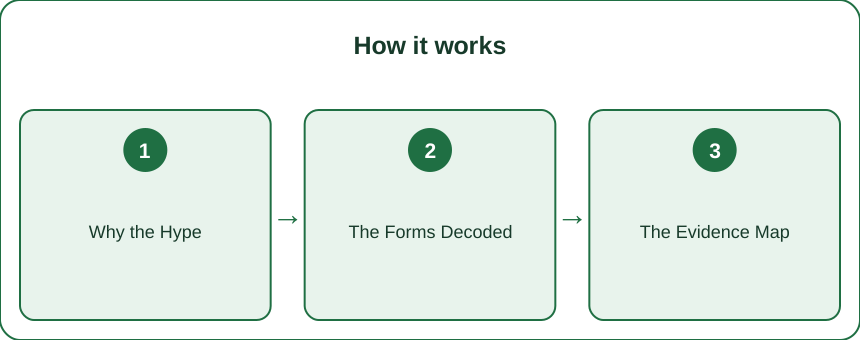
The Food-First Answer Nobody Markets
A genuinely magnesium-rich day is achievable without a bottle, and it brings fiber, potassium and a pile of other nutrients along for the ride — which the capsule can’t say.
The heavy hitters:
- Pumpkin seeds — one of the densest sources going. A small handful is a serious contribution.
- Almonds, cashews, peanuts
- Spinach, chard and dark leafy greens
- Black beans, edamame, lentils
- Dark chocolate (70%+) — small portions, but real
- Whole grains: oats, quinoa, brown rice
- Avocado, bananas, yogurt
A spinach-and-black-bean lunch with a handful of pumpkin seeds thrown at it covers a meaningful share of a day’s needs before you’ve opened anything.
If you do supplement, the practical protocol:
- 200-350mg of a well-absorbed form (glycinate for general use)
- Evening timing if you’re after the sleep and calm angle
- With food if you’re using citrate, to soften the gut effect
- Start at the low end for two weeks before increasing anything
When to see a professional: talk to your doctor or pharmacist before supplementing if you have any kidney condition, are pregnant, or take medications — magnesium interacts with several common ones including certain antibiotics, bisphosphonates, some diuretics and proton pump inhibitors. Thirty seconds with a pharmacist is free and settles it. And if you have persistent fatigue, cramping, palpitations or sleep problems, get them properly assessed rather than treated with a supplement guess; those symptoms have many causes and most of them aren’t a mineral.
FAQ
What’s the best type of magnesium for sleep?
Glycinate is the usual recommendation for evening use — it’s well absorbed and gentle on the digestive system, so it won’t wake you up for the wrong reason. Take it 30-60 minutes before bed. Expect modest help with falling asleep, not sedation.
How long does magnesium take to work?
For sleep and calm effects, most people who respond notice something within one to two weeks of consistent daily use. For migraine prevention, the useful trial period is longer — typically two to three months. If nothing has changed in a month for sleep, it probably wasn’t your limiting factor.
Can you take magnesium every day?
For most healthy adults, a modest daily supplemental dose is considered low-risk. The main sign you’ve overdone it is digestive — loose stools and cramping. People with kidney impairment are the important exception and should not supplement without medical guidance.
TL;DR
- The hype has a real core: magnesium matters, and a lot of people under-consume it.
- Form beats brand. Glycinate for general and evening use, citrate if you want the gut effect, skip oxide.
- 200-350mg is a sensible supplemental range. Start low.
- Migraine prevention is the strongest evidence file; sleep is modest and real; cramps are mixed.
- Food does half the job free — pumpkin seeds, greens, beans, nuts, dark chocolate.
- Kidney conditions, pregnancy or regular medication = ask first. Genuinely, ask first.
Keep Reading
This article is for general informational purposes only and is not medical advice. Always consult a qualified health professional for guidance specific to you.