Why It Actually Matters Which Type of Magnesium You Buy (They're Not Interchangeable)
Quick Answer: Magnesium is always bound to another compound, and that compound changes how well it absorbs and what it’s practically useful for. Glycinate absorbs well and is gentle — commonly chosen for sleep and relaxation. Citrate draws water into the intestines and is used for constipation. Oxide is cheap and poorly absorbed. Pick by purpose, not price.
Two bottles on the shelf. One says magnesium oxide, $6. One says magnesium glycinate, $22. Same mineral in the name, so you grab the cheap one.
That’s the moment the purchase stopped matching the reason you were buying it.
This is general information, not medical advice.

Why Are There So Many Types of Magnesium?
Because magnesium is never sold as a pure standalone mineral. It’s chemically unstable in that form, so it’s always bound to another compound to make it stable and absorbable.
That binding partner isn’t a marketing flourish. It genuinely changes:
- Molecular size and solubility, which affect how much magnesium actually crosses into your system rather than passing through
- The practical downstream effect, since some compounds have their own actions in the gut
So “magnesium” on a label tells you which mineral is involved and almost nothing about what the product will do. The word after it carries most of the information.
This is why the price gap exists, and why it isn’t simply a premium-branding markup. The cheap option is frequently cheap because less of it is absorbed.
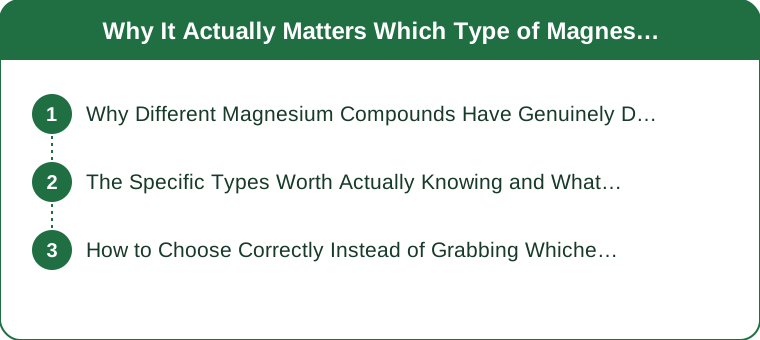
Which Magnesium Types Are Actually Worth Knowing?
Three cover most real-world decisions.
Magnesium glycinate — magnesium bound to glycine. Generally well absorbed and notably gentle on digestion, meaning it’s less likely to cause the loose stools that dose-limit other forms. This combination is why it’s the commonly recommended pick for sleep and relaxation support, and for anyone who simply needs to raise magnesium intake without gut side effects.
Magnesium citrate — bound to citric acid. Reasonably well absorbed, but with a notable tendency to draw water into the intestines. That property makes it a common choice for constipation and general digestive purposes. If you’re taking it for sleep, that same property is a side effect rather than a feature.
Magnesium oxide — the cheap one, and the poorly absorbed one. A relatively small fraction of the magnesium in it actually gets absorbed, with much of the rest staying in the gut, where it can have a laxative effect. It’s frequently the form in inexpensive supermarket supplements, which is exactly the trap in the opening paragraph.
Others exist — malate, threonate, taurate, chloride — each with their own advocates and thinner supporting evidence. If you’re starting out, the three above cover the ground.

What Nobody Tells You About Buying Magnesium
Nobody tells you that the number on the front isn’t the magnesium content. “1000 mg magnesium glycinate” often refers to the total compound weight, not the elemental magnesium in it. The elemental figure — the one that matters — is usually smaller and printed on the back. Comparing front-label numbers across brands is comparing nothing.
Nobody tells you that the laxative effect is your dose ceiling. For most forms, loose stools are the practical limit on how much you can take. That’s the main reason gentleness matters as much as absorption.
Nobody tells you that timing follows purpose. Taken for sleep, evening makes sense. Taken for constipation, timing is about your own routine. There’s no universal “best time.”
And nobody tells you that magnesium interacts with common medications, including certain antibiotics and thyroid medication, where spacing doses apart matters. This is a genuinely worthwhile pharmacist question rather than a detail to skip.
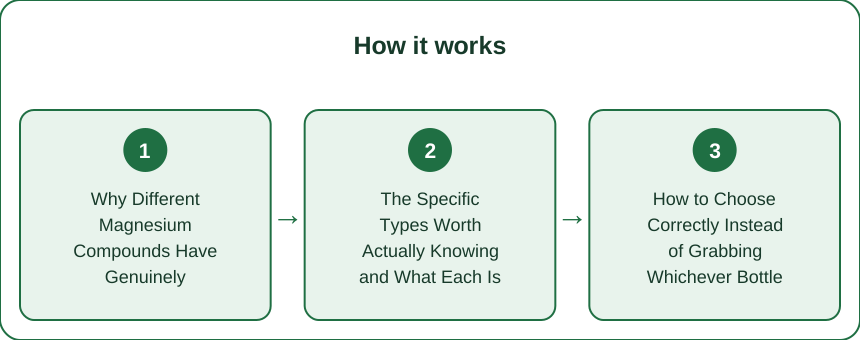
How Do You Choose the Right One?
Three steps, in order.
1. Name your actual reason first. Sleep? Cramps? Constipation? General intake? The reason determines the form, and skipping this step is how people end up with citrate for sleep and an unhelpful surprise.
2. Read the compound name on the label, not the front of the bottle. Check both which form it is and the elemental magnesium per serving. A product listing only “magnesium” without specifying the compound is telling you something by omission.
3. Ask a pharmacist when you’re unsure. They’ll answer this in thirty seconds at no cost, including the medication interaction question. This is a genuinely better use of your time than another hour comparing forum opinions.
What not to do: default to whichever bottle is cheapest or most visually prominent. Given that oxide is both the cheapest and one of the least absorbed, price shopping actively works against you here.
Worth adding: if you’re taking magnesium for exercise cramps, it’s one input among several. Hydration, sodium, and overall training load usually matter more, and gear that doesn’t restrict circulation helps too — well-fitted high waist compression leggings rather than anything that bites at the knee or calf.
When to see a professional: persistent cramps, ongoing constipation, or fatigue that doesn’t resolve deserve an actual diagnosis rather than a supplement. Magnesium supplementation also isn’t appropriate for everyone — people with kidney disease in particular should not supplement without medical supervision. This is general information, not medical advice.
FAQ
Which magnesium is best for sleep?
Glycinate is the form most commonly recommended for sleep and relaxation, largely because it’s well absorbed and gentle enough on digestion to take consistently in the evening.
Which magnesium is best for constipation?
Citrate is the usual choice, because drawing water into the intestines is precisely the effect you want there. Oxide is also used for this, though its poor absorption is the reason why.
Can I just take a multivitamin instead?
Multivitamins typically contain small amounts of magnesium, often in cheaper forms, so they rarely deliver a meaningful supplemental dose. Check the elemental amount on the label before assuming it’s covered.
TL;DR
- Magnesium is always bound to another compound, and that compound drives absorption and effect.
- Glycinate: well absorbed, gentle, commonly used for sleep and general intake.
- Citrate: draws water into the intestines — used for constipation and digestion.
- Oxide: cheapest, poorly absorbed, often laxative.
- Choose by purpose, read the elemental amount on the back, and ask a pharmacist about interactions — especially with thyroid medication or antibiotics.
Keep Reading
This article is for general informational purposes only and is not medical advice. Always consult a qualified health professional for guidance specific to you.