The Magnesium Timing Mistake That's Quietly Canceling Out the Sleep Benefit
Quick Answer: Taking magnesium first thing in the morning, when the goal is better sleep, is a common timing mistake — magnesium glycinate or citrate taken 30-60 minutes before bed supports the relaxation and sleep benefits far more directly than a morning dose does.
How long does it take for magnesium to work for sleep? Most people notice an effect within a few days to two weeks of consistent evening use, not from a single dose.
The right supplement, the right dose, taken at the wrong time — and then the conclusion becomes “magnesium doesn’t work for me,” when timing was the actual issue all along.

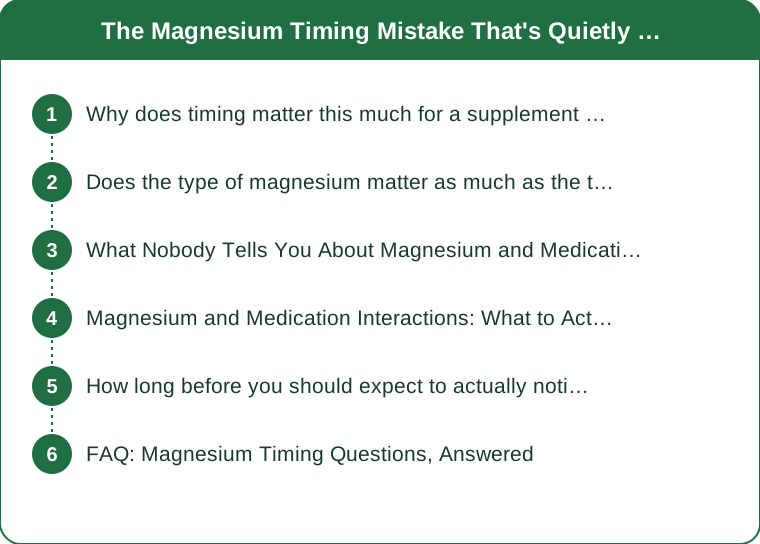
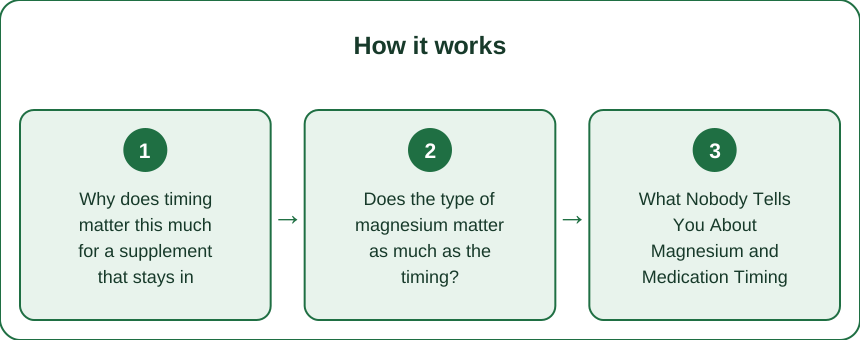
Why does timing matter this much for a supplement that stays in your system all day?
Magnesium’s calming effect on the nervous system is most useful when it aligns with your body’s natural wind-down window, since the mineral supports GABA receptor activity involved in relaxation — taking it in the morning provides the mineral itself, but misses the timing alignment with sleep onset.
A morning dose gets metabolized and distributed throughout the day, meaning by bedtime, blood levels may have already declined from their peak, reducing the direct relaxation effect right when it’s actually needed.
Does the type of magnesium matter as much as the timing?
Magnesium glycinate and magnesium citrate are generally better absorbed and gentler on digestion than magnesium oxide, a cheaper form that’s more likely to cause diarrhea rather than deliver a meaningful dose — this matters because a poorly absorbed form provides less benefit at any time of day.
Glycinate specifically is often recommended for sleep, since glycine itself has some calming properties independent of the magnesium, potentially compounding the relaxation effect when taken in the evening.
What Nobody Tells You About Magnesium and Medication Timing
Magnesium can interact with certain medications, including some antibiotics and blood pressure medications, reducing their absorption if taken too close together — spacing doses by at least two hours is a commonly recommended precaution.
A less discussed detail: excess magnesium beyond what the body needs is simply excreted rather than stored, meaning consistent daily dosing matters more than occasionally taking a larger amount, since there’s no meaningful “loading up” benefit.

Magnesium and Medication Interactions: What to Actually Check
Anyone on regular prescription medication should check with a pharmacist or doctor before starting magnesium supplementation, since interactions vary significantly by medication class and aren’t always intuitive.
This caution applies regardless of which magnesium type or timing is chosen, since the interaction risk relates to the mineral itself, not the specific formulation or dosing schedule.
How long before you should expect to actually notice a difference?
Most people report noticing a sleep quality difference within a few days to two weeks of consistent evening use, rather than from an isolated single dose, since magnesium status builds gradually rather than working like a fast-acting sedative.
Tracking sleep quality subjectively (or with a sleep tracker) over a two-week window gives a more reliable read than judging based on any single night’s experience.
FAQ: Magnesium Timing Questions, Answered
Is it harmful to take magnesium in the morning instead of at night?
No — it’s not harmful, it’s simply less optimally timed for sleep-specific benefits; some people take it in the morning for other reasons, like muscle recovery.
How close to bedtime should the evening dose actually be?
30-60 minutes before bed is a commonly recommended window, giving enough time for absorption to begin without requiring it to work instantly.
Can taking magnesium too late at night cause any issues?
For most people, no, though magnesium citrate specifically can have a mild laxative effect in some individuals if the dose is on the higher end.
TL;DR:
- Morning magnesium dosing is a common mistake when the actual goal is better sleep
- Glycinate or citrate taken 30-60 minutes before bed aligns better with the relaxation window
- Magnesium can interact with certain medications, so spacing doses matters
- Expect a noticeable difference over one to two weeks of consistent evening use, not a single dose
Same supplement, same dose — moving it to the evening is often the single change that makes the difference finally show up. This is general information, not medical advice.
Keep Reading
This article is for general informational purposes only and is not medical advice. Always consult a qualified health professional for guidance specific to you.