Why Magnesium Affects Digestion Before It Affects Sleep
Quick Answer: Poorly absorbed magnesium forms stay in the gut, where they draw water into the bowel osmotically and produce a laxative effect within hours. Well-absorbed forms enter circulation and reach the tissues involved in sleep and muscle function, which takes days to weeks to show benefit. Citrate and oxide are the classic digestive offenders. Glycinate and malate are the ones to choose if sleep is your goal. The digestive effect is faster because it does not require absorption at all.
You bought magnesium because someone said it helps sleep. Your sleep is unchanged and your morning is now unpredictable.
You almost certainly bought the wrong form, and the timing difference tells you exactly why.


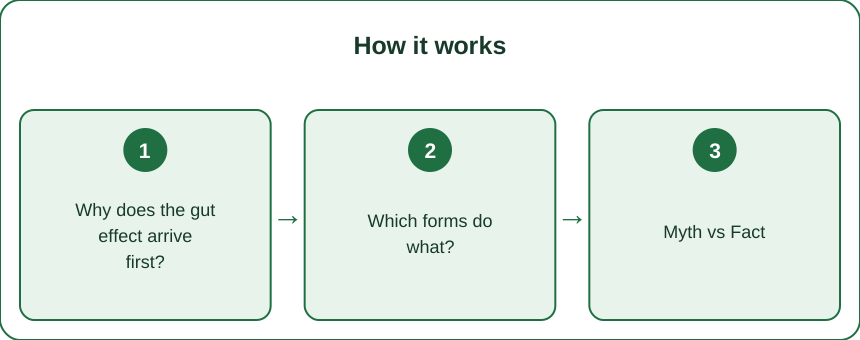
Why does the gut effect arrive first?
Because it is the effect of magnesium that has not been absorbed.
Magnesium salts that dissolve readily but absorb poorly remain in the intestinal lumen. Magnesium there is osmotically active, meaning it pulls water into the bowel, which increases volume, stimulates motility and softens stool. This is the mechanism behind magnesium-based laxatives, and it is a well-established clinical use rather than a side effect in the usual sense.
That process needs no absorption, no transport and no tissue uptake. It happens within two to six hours.
The sleep and muscle effects require the opposite: magnesium has to cross the gut wall, enter circulation, and gradually correct tissue levels. Serum magnesium is tightly regulated and represents only about 1 percent of body magnesium, so replenishing actual stores is a slow process measured in weeks.
So the diarrhoea means it is not working?
In a sense, yes. It means that portion of the dose stayed in your gut rather than reaching your bloodstream.
Which forms do what?
This is the practical core of the whole subject.
Magnesium oxide. High elemental magnesium per pill, poor absorption, strong laxative effect. Cheap and extremely common in supermarket supplements. Poor choice for sleep, reasonable choice for constipation.
Magnesium citrate. Better absorbed than oxide but still notably laxative at higher doses. Used clinically as a bowel preparation. Fine at modest doses for some people, unreliable for sleep.
Magnesium glycinate. Bound to glycine, well absorbed, minimal gut effect. The default recommendation for sleep and general repletion. Glycine itself has some calming properties.
Magnesium malate. Well absorbed, gentle, often preferred by people who want daytime dosing.
Magnesium threonate. Marketed for cognitive effects, expensive, limited human evidence, minimal laxative effect.
Magnesium chloride. Reasonably absorbed, sometimes used topically, though transdermal absorption evidence is weak.
Magnesium sulphate. Epsom salts. Strongly laxative when ingested. Bath absorption is minimal despite popular claims.
If I already own the citrate, is it wasted?
Not at all. Use it for its actual strength, occasional constipation, and buy glycinate for the sleep goal.
Myth vs Fact: magnesium supplementation
Myth: A blood test tells you if you are deficient. Fact: Serum magnesium is tightly regulated and stays in range even when tissue stores are depleted. It reliably detects severe deficiency and misses the common mild version, which is why a normal result does not rule much out.
Myth: More magnesium means better sleep. Fact: Above the point of repletion, additional magnesium mostly produces gut symptoms. The dose-response curve flattens and then turns unpleasant.
Myth: Epsom salt baths raise your magnesium. Fact: Evidence for meaningful transdermal absorption is weak. The bath may still help you relax, which is a real benefit through a different mechanism.
Myth: It works immediately. Fact: The calming effect some people notice on the first night is real but modest and partly attributable to glycine in glycinate forms. Genuine repletion takes weeks, and studies of magnesium and sleep typically run for four to eight weeks.
Myth: Everyone is deficient. Fact: Intakes below recommended levels are common, but frank deficiency is much less so in healthy people eating varied diets. Magnesium is abundant in leafy greens, nuts, seeds, legumes and whole grains.

How should I actually dose it?
Start conservative and adjust based on the gut, which will tell you quickly.
-
Start at 100 to 200mg of elemental magnesium in the evening, in a glycinate or malate form.
-
Read the elemental content, not the compound weight. A 1,000mg magnesium glycinate capsule may contain only 100 to 140mg of elemental magnesium. This confuses almost everyone at first.
-
Increase gradually over a couple of weeks to 300 to 400mg if needed, staying below the point where stools loosen.
-
Take it with food to improve tolerance, and split the dose if you are taking more than 200mg at once.
-
Give it four to six weeks before judging the sleep effect. Judging at day three is judging the wrong thing.
-
Separate it from zinc, calcium and iron by a couple of hours, since they compete for absorption, and from certain medications including some antibiotics and thyroid medication.
What is the upper limit?
The tolerable upper intake for supplemental magnesium in adults is commonly cited as 350mg per day of elemental magnesium, above which gut symptoms become likely. Food magnesium is not subject to this limit.
When is magnesium not the answer?
Worth being honest about, because it is often recommended for things it does not fix.
If your sleep problem is behavioural, caffeine timing, screen exposure, an inconsistent schedule or a warm bedroom, magnesium will not overcome it. The environmental variables are much larger.
If cramps are exercise-related, the evidence for magnesium is weak. Exercise-associated muscle cramping appears to be more related to neuromuscular fatigue than to electrolyte status in most cases.
If you have kidney disease, magnesium supplementation can be genuinely dangerous, since impaired kidneys cannot excrete the excess. This requires medical supervision.
If you take certain medications, magnesium interferes with absorption of some antibiotics, bisphosphonates and levothyroxine, and interacts with some diuretics and heart medications.
If symptoms are significant, persistent fatigue, palpitations, numbness or severe cramping deserve investigation rather than a supplement. These can have serious causes, and magnesium is a poor diagnostic strategy.
This is general information, not medical advice. Consult a doctor before supplementing if you have kidney disease or take regular medication.
FAQ: Magnesium Questions, Answered
How long until the laxative effect stops?
If you switch to a well-absorbed form, usually immediately. If you stay on citrate or oxide, some people adapt partially over a couple of weeks and many do not.
Morning or night?
Night for sleep-focused forms like glycinate. Timing matters less than consistency for repletion, so take it when you will actually remember.
Can I get enough from food?
Most people can. Pumpkin seeds, almonds, spinach, black beans, dark chocolate and whole grains are all substantial sources, and food magnesium comes without the gut effects.
Does heavy sweating increase my needs?
Some magnesium is lost in sweat, though considerably less than sodium. Heavy training in hot weather modestly increases requirements, but sodium is the far more urgent replacement.
Why did it work for my friend and not for me?
Most likely because they were low and you are not. Supplementing a nutrient you already have enough of rarely produces a noticeable effect.
This is general information, not medical advice.
TL;DR:
- The gut effect is fast because it is caused by magnesium that was not absorbed pulling water into the bowel.
- Oxide and citrate are laxative. Glycinate and malate are the sleep-oriented choices.
- Read elemental magnesium, not compound weight, and start at 100 to 200mg in the evening.
- Give it four to six weeks, stay under about 350mg supplemental, and separate it from zinc, iron and certain medications.
If your magnesium is doing something to your mornings and nothing to your nights, that is a form problem rather than a magnesium problem. Change the compound and the same nutrient starts arriving where you wanted it.
Keep Reading
This article is for general informational purposes only and is not medical advice. Always consult a qualified health professional for guidance specific to you.