Why the Wrong Magnesium Type Can Give You Diarrhea Instead of Better Sleep
Quick Answer: Magnesium citrate and magnesium oxide are poorly absorbed and pull water into the intestines, which is why they’re often used as laxatives and commonly cause loose stools. Magnesium glycinate is much better absorbed and gentler on digestion, making it the better choice for sleep and relaxation goals.
Q: So all magnesium supplements aren’t interchangeable? Not at all — the form changes both how much gets absorbed and how your gut reacts.


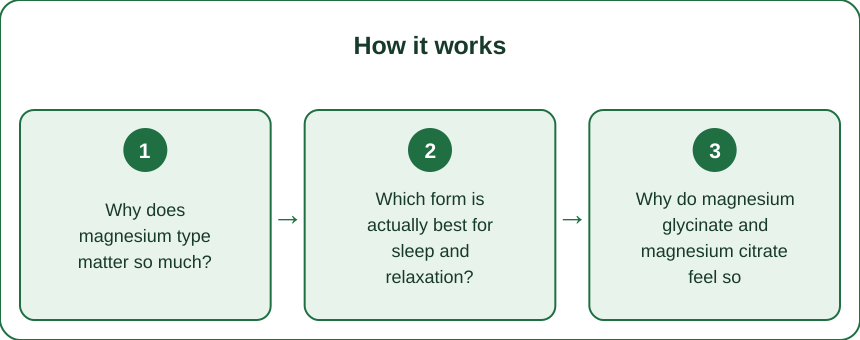
Why does magnesium type matter so much?
Different magnesium compounds have dramatically different absorption rates and mechanisms. Magnesium oxide, common in cheap supplements, has poor bioavailability (some estimates around 4%) — meaning most of it passes through the gut unabsorbed, pulling water along with it and often causing loose stools rather than raising blood magnesium meaningfully.
Q: Is that why magnesium citrate is sold as a laxative? Exactly — citrate is absorbed better than oxide but still draws water into the intestine at typical supplement doses, which is precisely the mechanism used in over-the-counter laxative products.
Which form is actually best for sleep and relaxation?
Magnesium glycinate (magnesium bound to the amino acid glycine) is well-absorbed and doesn’t carry the same laxative effect, because it’s taken up through a different intestinal pathway than the poorly-absorbed forms. Glycine itself also has mild calming properties, which may add a complementary benefit for sleep specifically.
Q: What about magnesium threonate? Threonate is marketed specifically for cognitive benefits due to its ability to cross the blood-brain barrier more readily, but evidence there is less established than for glycinate’s general absorption and tolerability.

Why do magnesium glycinate and magnesium citrate feel so different?
The felt difference usually isn’t about magnesium’s effect on the brain — it’s about the digestive side effects overshadowing everything else. Someone taking citrate may attribute a restless night to ‘magnesium not working’ when the actual disruption was stomach discomfort or urgent bathroom trips interrupting sleep.
Q: Could someone need citrate for a different reason? Yes — citrate’s laxative effect makes it useful specifically for occasional constipation, just not ideal as a daily sleep-focused supplement.
Does timing change how magnesium works, regardless of type?
Taking magnesium 30-60 minutes before bed, rather than with a morning multivitamin, aligns better with sleep-focused goals since its calming effects are most relevant in that window. Taking a well-absorbed form at the wrong time won’t cause harm, but won’t target sleep specifically either.
FAQ: Magnesium Type Questions, Answered
Can you take too much magnesium?
Yes — excess magnesium, especially from poorly-absorbed forms, is a common cause of diarrhea and gut upset; staying within the standard 300-400mg daily supplemental range and choosing a well-absorbed form reduces this risk.
How long does it take for magnesium glycinate to help sleep?
Some people notice an effect within days, but a fair trial is generally 2-4 weeks of consistent nightly use before judging effectiveness.
Does food-source magnesium avoid the digestive issues entirely?
Generally yes — magnesium from food (leafy greens, nuts, seeds) doesn’t concentrate in the gut the way a supplement dose does, so digestive side effects are far less common from diet alone.
TL;DR:
- Magnesium oxide and citrate are poorly absorbed and commonly cause loose stools
- Magnesium glycinate is better absorbed and gentler for sleep-focused use
- Digestive side effects, not lack of efficacy, are often why magnesium ‘doesn’t work’
- Take a well-absorbed form 30-60 minutes before bed for sleep goals specifically
This is general information, not medical advice — check with a doctor before starting supplements, especially with kidney conditions or medications.
Keep Reading
This article is for general informational purposes only and is not medical advice. Always consult a qualified health professional for guidance specific to you.